
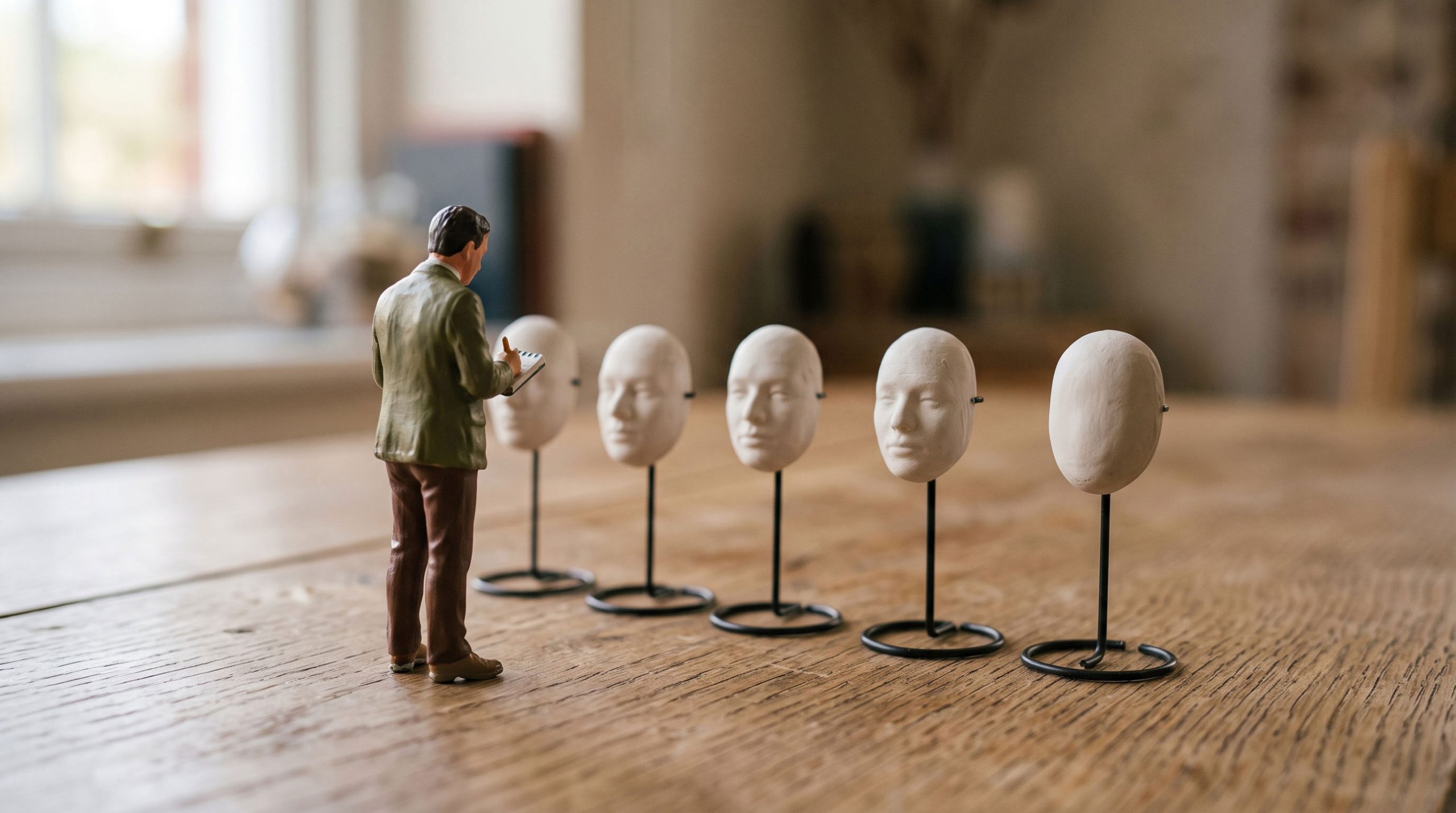
For years, the advice for spotting a video call scam was reassuringly practical. Ask the person to turn their head. Ask them to wave a hand in front of their face. Watch for the lag, the flicker at the hairline, the smear where a filter fails to keep up. If you have seen the scam-baiting videos, the ones where a fraudster is asked to hold three fingers over their nose and the whole illusion falls apart, you know the routine. It used to be easy to spot a deepfake.
Those times have changed.
The tricks worked because, until recently, faking a face in real time was genuinely hard. High-quality deepfake video took hours of rendering on serious hardware, which is why live scammers fell back on crude, Snapchat-style face filters that broke the moment anything crossed the face. That gap has now closed. Open-source tools can swap a face in real time from a single photograph, running on an ordinary consumer graphics card and feeding straight into Zoom, Teams, or Google Meet. The barrier that made the old detection tricks reliable has gone.
Engineering firm Arup lost $25.6 million to a deepfake. A finance employee joined a video call with the company CFO and several colleagues. Every person on that call, except the employee, was an AI-generated fake.
The Arup case, made public in 2024, is the one every security team now cites, and for good reason. The employee had been suspicious of the initial email request. What overcame that suspicion was the video call itself: familiar faces, familiar voices, several senior colleagues all corroborating the instruction in real time. He made fifteen transfers before checking with head office and discovering that none of the people on the call had been real. The money was never recovered.
The detail that should give any executive pause came afterward. Arup’s own global technology chief, curious about how his team had been caught, tried to build a real-time deepfake of himself using free tools. It took him about 45 minutes. This is not a capability reserved for well-resourced criminal groups. It is available to anyone with a laptop and an afternoon.
The natural response is to look harder, to train people to catch the fakes. The evidence suggests that is a losing position. In real-world conditions, automated detection tools have been found to lose close to half their accuracy compared with laboratory tests, and human reviewers identify deepfakes correctly only slightly more often than they would by guessing.
Automated deepfake detection can lose 45 to 50 percent of its accuracy in the real world. Humans do only a little better than chance.
Some attacks are still caught, and how they are caught matters. In July 2024, an executive at Ferrari received messages and then a call that convincingly cloned the CEO’s voice, regional accent and all, pushing an urgent and confidential deal. The executive grew suspicious and asked a question only the real CEO could answer: the title of a book he had recently recommended. The impersonator could not answer, and the call ended. The chief executive of WPP was targeted in a similar attempt around the same time.
Ferrari stopped a deepfake of its CEO with a single question only the real person could answer. That defense worked. It also does not scale.
The Ferrari save is encouraging and instructive in equal measure. It worked because one alert person happened to think of the right question in the moment. That is not a control. You cannot hand a finance team, or a busy help desk, a policy that reads: think of something clever to ask. The uncomfortable conclusion underneath all of this is not really about deepfakes at all. It is that the thing we have relied on for decades, the simple confidence that comes from seeing a familiar face or hearing a familiar voice, has quietly stopped being proof of anything.
That is the problem we think matters, and it is bigger than any single scam. When both the face and the voice can be faked, confirming that you are dealing with a real, genuine person becomes a structural problem rather than a matter of vigilance. It is the gap we are building Loxada Verify to close, and it is the subject of the next piece in this series, which looks at where this is already costing organizations the most. Not the boardroom deepfake, but the everyday call to the IT help desk.
If the underlying question, how you confirm who is really on the other end of a call, is one your organisation is starting to ask, it is worth following along. Read our blog post about this here.