Post-quantum migration is becoming a compliance requirement for a growing number of organizations.
Post-quantum protection without re-engineering your applications. (Launching Q4 2026)
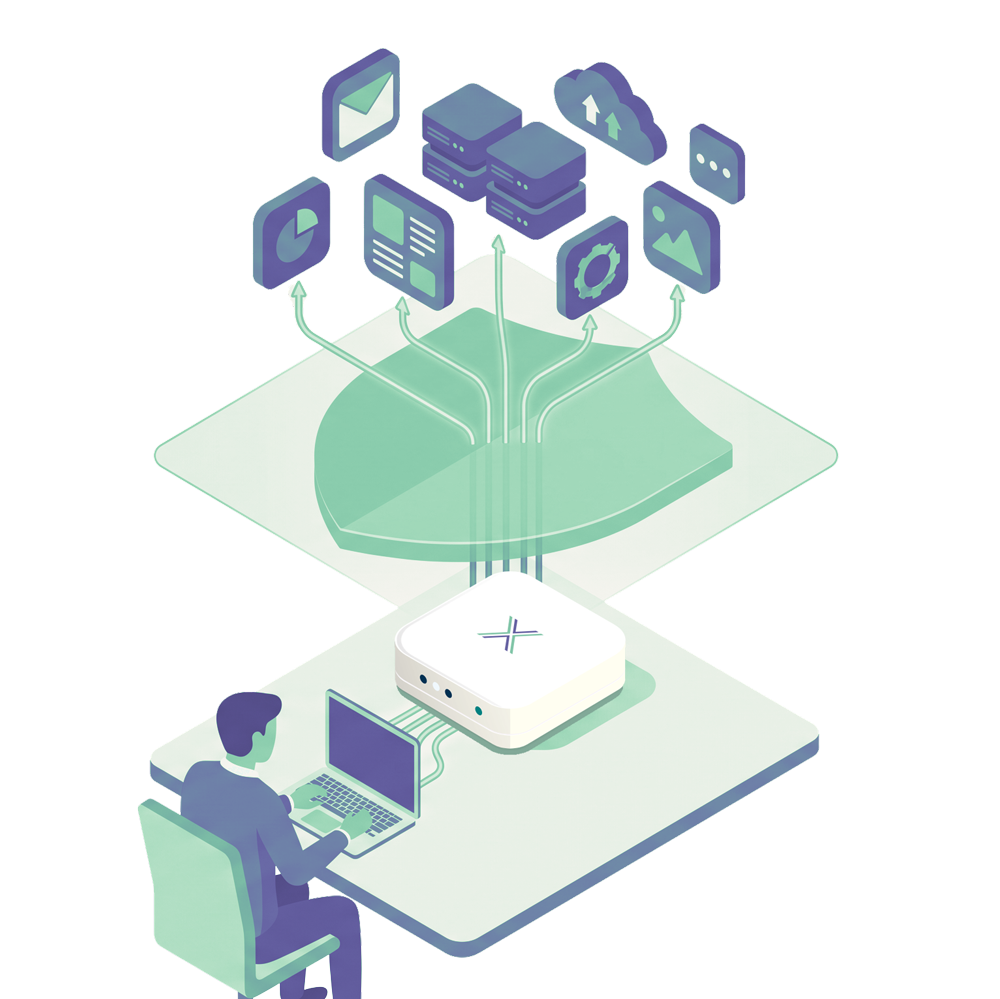
Loxada Quantum Secure applies hybrid post-quantum cryptography at the managed network layer, covering traffic from every connected device, independently of your software stack.
The problem
The gap between the deadline and your applications
Post-quantum readiness is becoming a requirement, through NIST’s standardized algorithms, federal direction such as NSM-10 and EO 14306, and crypto-agility expectations in financial-sector rules including the EU’s DORA (RTS 2024/1774). But migrating every application, operating system and third-party tool to new cryptography takes years.
In the meantime, data with a long confidential life can be captured now and decrypted later, once quantum computers are capable, a pattern known as harvest now, decrypt later. The gap between when readiness is expected and when your applications can actually get there is the problem Quantum Secure closes.
NIST published its first standardized post-quantum algorithms in 2024.
How it works
Quantum-resistant cryptography, applied at the network layer
Loxada Quantum Secure brings NIST-standard post-quantum algorithms (ML-KEM, ML-DSA and SLH-DSA) to the managed network layer, deployed in a hybrid model that layers post-quantum protection on top of the classical cryptography already in use.
Because it operates at the network layer rather than inside each application, you do not have to wait for every vendor, operating system and internal tool to ship its own post-quantum support. It extends the same managed system as Loxada Secure and is centrally managed.
Browser and cloud providers are adding post-quantum protection to their own connections, but that only covers traffic to those specific services. Applying it at the network layer also covers legacy applications and endpoints that are not post-quantum capable.
What you get
What Loxada Quantum Secure gives you
Movement toward quantum-resistant protection without application changes. No re-engineering of your software, operating systems or existing tools.
NIST-standard algorithms in a hybrid model. Post-quantum protection layered on your existing cryptography, not a rip-and-replace.
A documented step you can take now. Demonstrable progress toward post-quantum readiness ahead of full application-layer migration, on the system you already run.
Where Loxada Quantum Secure fits
Organizations facing post-quantum compliance requirements before their application stack can deliver them
Federal contractors and agencies. Organizations within scope of NSM-10 face mandated post-quantum migration across their federal cryptographic inventory. Smaller firms in the federal supply chain face the same pressure as primes, with fewer resources to navigate it. Loxada Quantum Secure provides a demonstrable, standards-based post-quantum layer that can be deployed immediately.
Financial services. DORA and NIS2 are driving post-quantum readiness requirements across the EU and UK financial sector. Loxada Quantum Secure provides network-layer coverage while application-layer migration progresses on vendor timelines.
Healthcare and regulated data. Evolving HIPAA guidance and broader data-security standards are incorporating post-quantum expectations. Network-layer deployment covers the full device estate, including clinical applications and third-party systems with no current post-quantum roadmap.
Launching Q4 2026
Sign up for early access and get ahead of compliance deadlines before the Q4 2026 launch.
We use cookies to ensure that we give you the best experience on our website. If you continue to use this site we will assume that you are happy with it.