Defense contractors work in a high-stakes environment. Whether you support classified programs, operate under ITAR, or hold critical infrastructure contracts, your systems have to meet the highest security standards, including well beyond your own facilities.
From an engineer reaching secure documentation at home to a technician working at a partner site, the modern defense supply chain depends on connectivity that often sits outside direct IT control. This is the uncontrolled network edge: the point where your defenses end and external risk begins, and it has become one of the most exploited weaknesses in cybersecurity.
Loxada provides a secure, managed network edge, built for exactly the places where supply-chain trust, firmware integrity, and connection integrity have to hold.

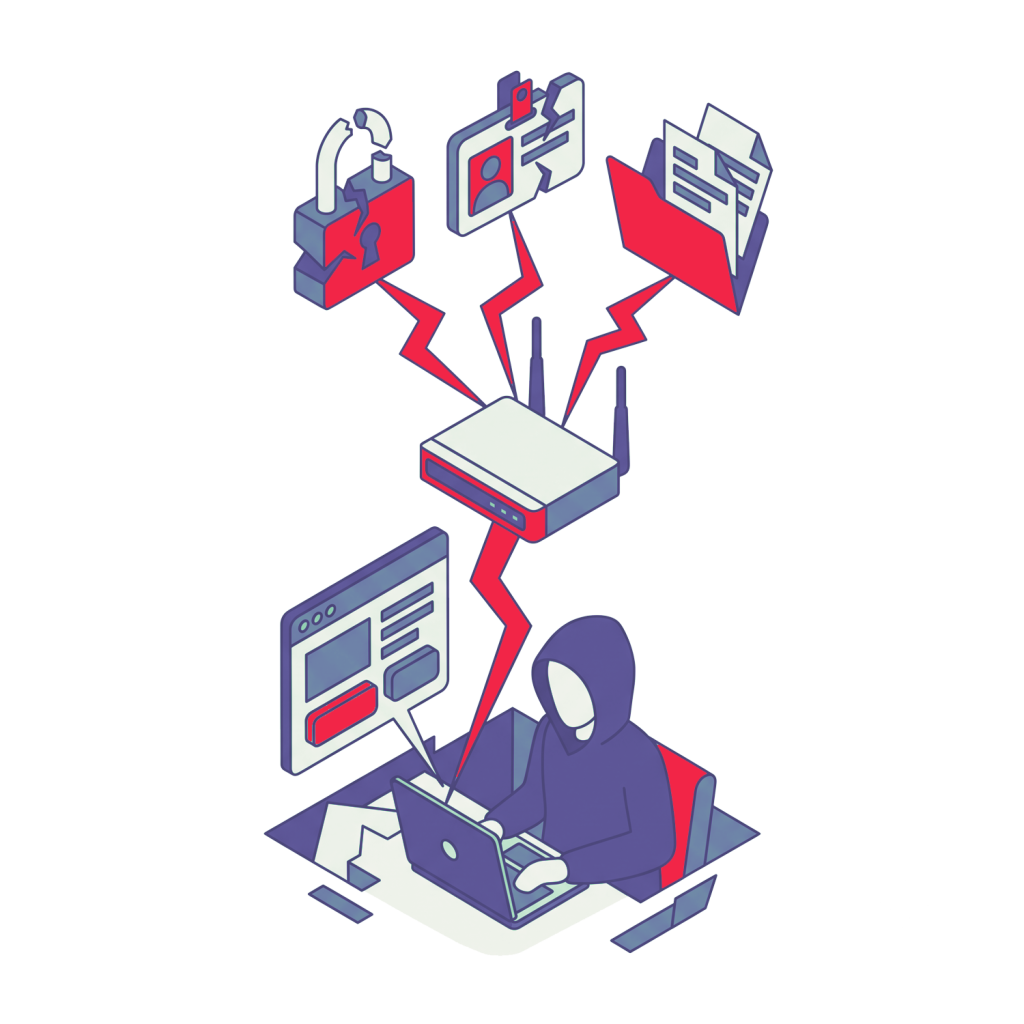
Defense suppliers face an organized, commercial threat ecosystem. Ready-made attack services and AI-assisted automation have made it far easier for adversaries to operate at scale.
In practice, that means:
The shift is measurable. Exploitation of edge-device and VPN vulnerabilities rose from 3% to 22% of vulnerability-related breaches in a single year (Verizon 2025 Data Breach Investigations Report, April, 2025). Even with secure systems and well-trained people, a compromised network puts everything reachable from it at risk. The network edge you know about is no longer your true perimeter.
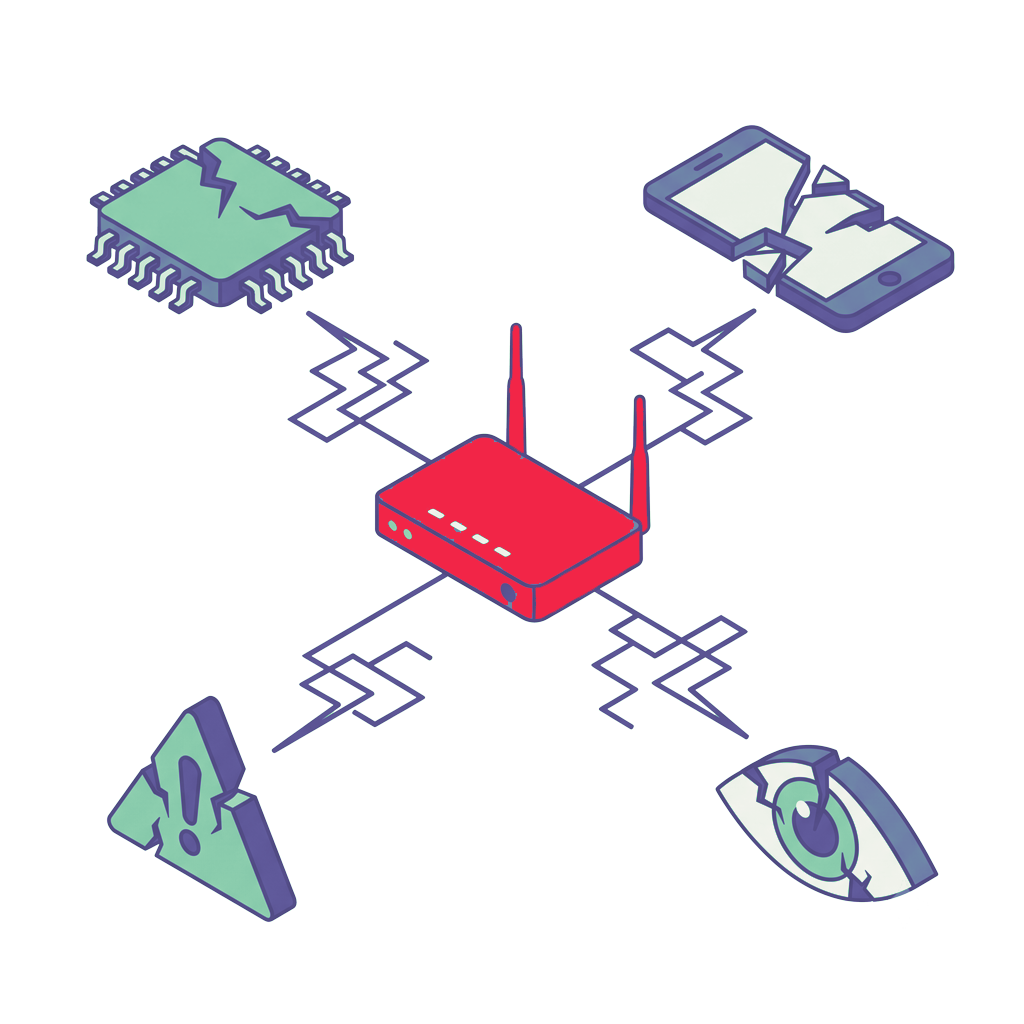
Off-the-shelf and ISP-supplied routers rarely meet the compliance and operational demands of defense work. Yet consumer-grade or unmanaged devices remain common at remote sites, home offices, and mobile deployments. These devices can:
For suppliers on sensitive or restricted programs, that is more than a technical concern. It can jeopardize contracts, breach export controls, or expose data to hostile actors.
Agencies including the NSA, CISA, and NCSC have increasingly highlighted routers and edge devices as priority targets, and have published guidance on securing edge infrastructure and maintaining firmware integrity across the environment.
Loxada supplies hardened, managed secure routers that establish trust even where you don’t own the surrounding infrastructure. We replace the manufacturer’s firmware entirely with Loxada’s own secure firmware, so your security no longer depends on the vendor’s code or on services you can’t see into.
Loxada’s secure firmware replacing the manufacturer’s software in full.
An encrypted connection, routed through Loxada’s secure connectivity layer out to the internet, clear of the untrusted local network.
Automatic, verifiable updates from centrally controlled infrastructure, independent of the hardware manufacturer.
Returns to a secure state if tampered with, so a reset can’t drop the device back to an insecure default.
Centrally managed, with devices bound to named users and revocable on demand.
Blocks known malicious domains, dropping any request to a domain on Loxada’s aggregated blocklist of known-bad domains before it resolves.
No complicated setup, user maintenance, or on-site IT. Devices are ready to deploy out of the box.
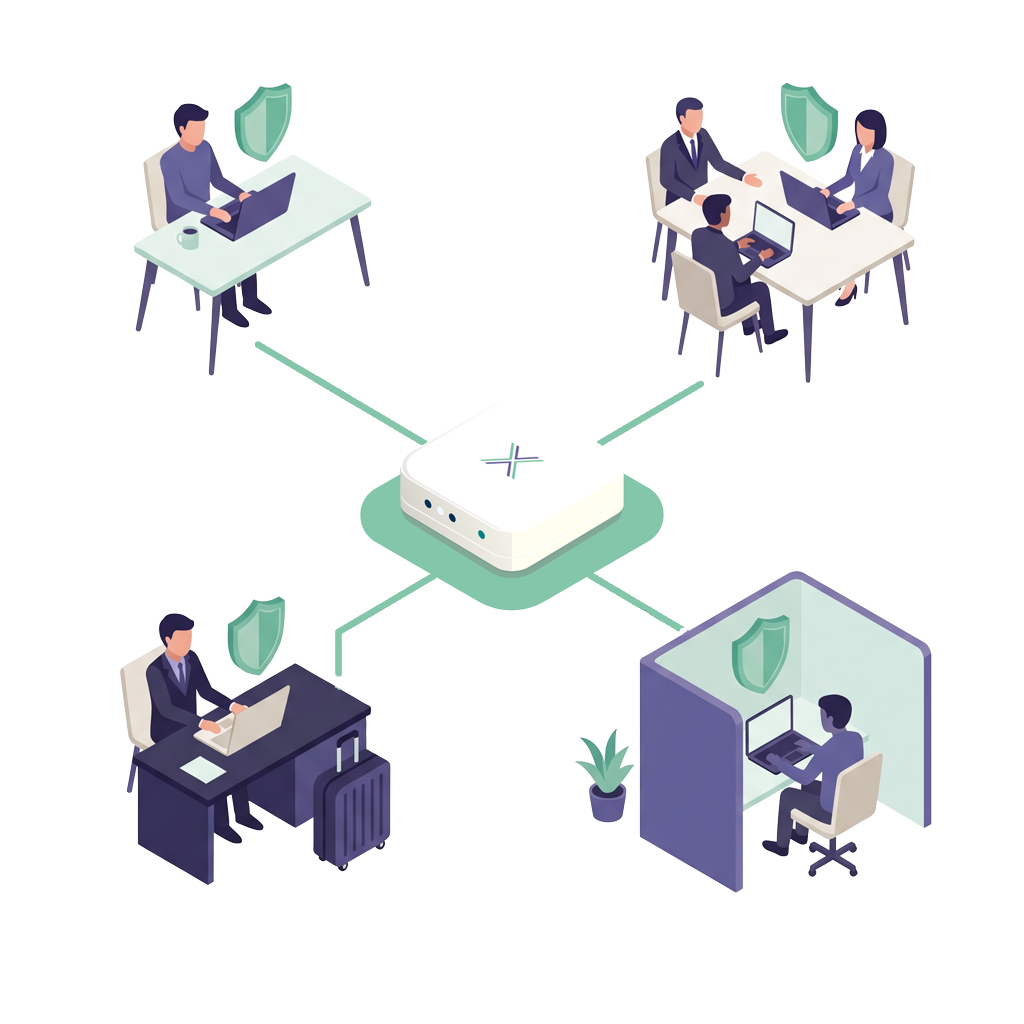
Loxada suits real defense conditions, where the perimeter isn’t always yours to control:
Home offices for engineers or compliance leads on restricted programs.
Partner or subcontractor facilities running shared IT infrastructure
Field operations, including temporary deployments and live test sites.
Remote labs and pop-up engineering centers.
Small or mobile teams with no local IT resource.
In each case, Loxada extends trusted, controlled connectivity to wherever secure work happens, without giving up control, compliance, or performance.
Secures sensitive access across distributed teams and facilities.
Reduces risk at the network edge, where visibility is lowest.
Supports compliance with NIST 800-171, DFARS, and CMMC requirements.
Aligns with NSA and CISA guidance on firmware and edge-device security.
Deploys quickly, with no specialized hardware or configuration
Deployment is fully auditable, with monthly security reports and device-status visibility. Loxada secures one specific layer, the networks outside your control your people connect from, and works alongside your endpoint, identity, and connectivity tooling rather than replacing it.